At the heart of the Catechesis of the Good Shepherd (CGS) is a beautiful truth: God and the child are already in relationship.
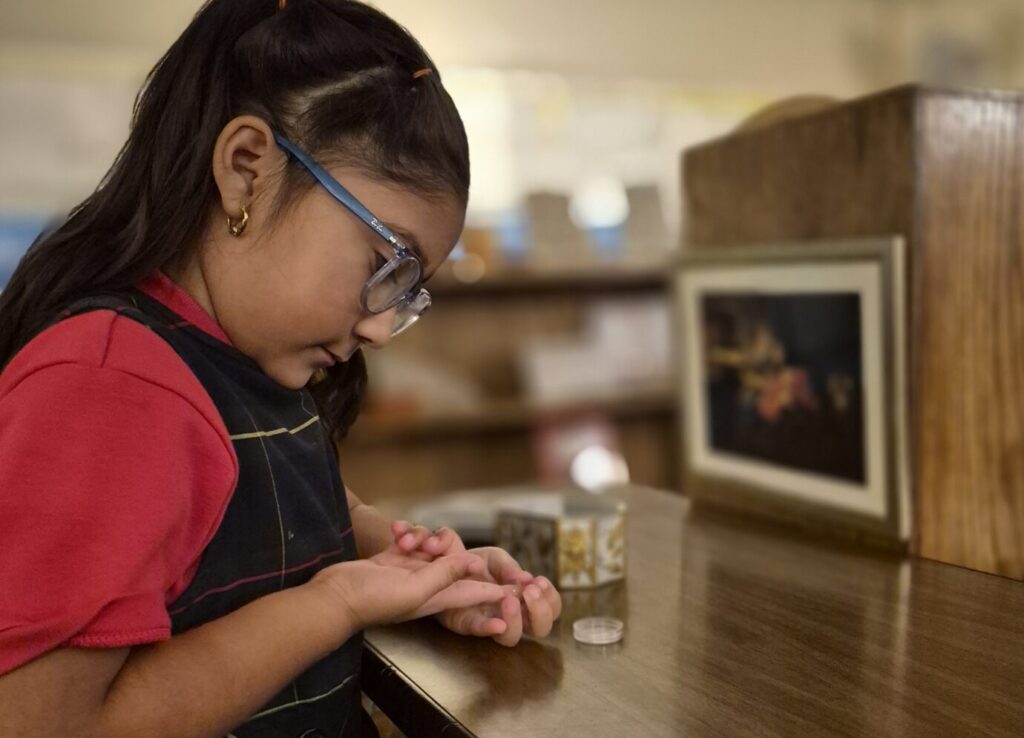
Our role is to nurture that bond—and in CGS, we do this by offering a carefully prepared, sacred space called the atrium.
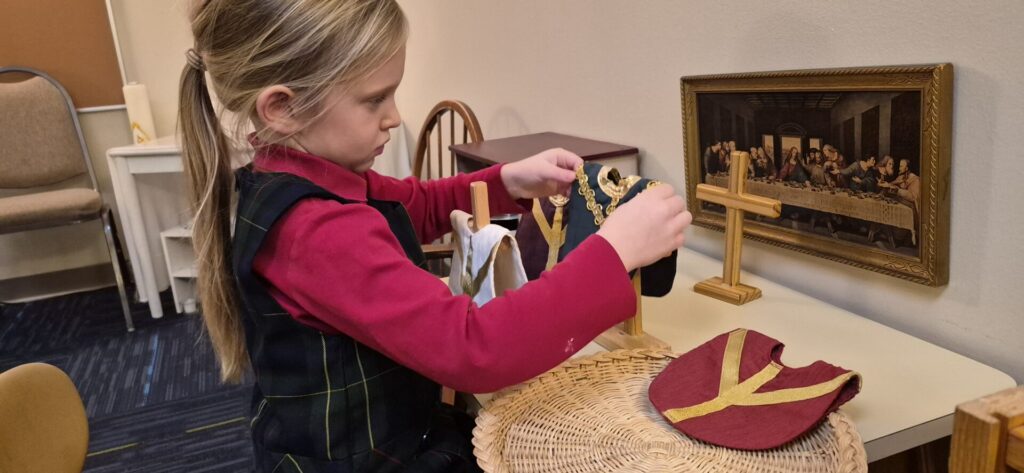
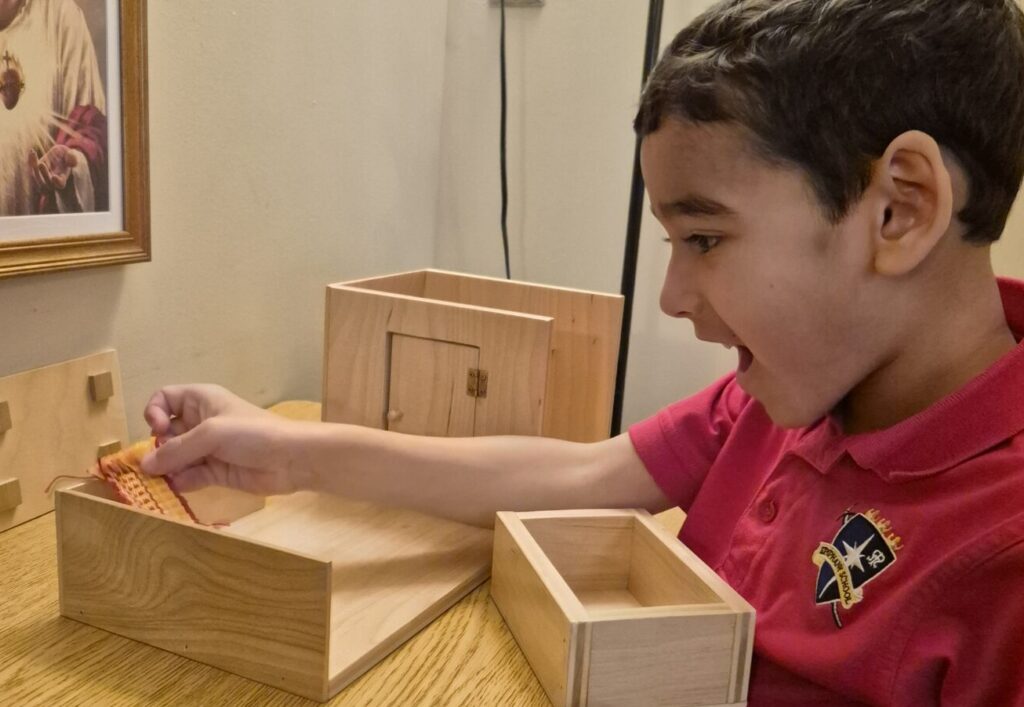
The atrium is designed especially for children and filled with hands-on materials that draw them into the mysteries of our faith. Here, they encounter Jesus, the Good Shepherd, in a way that speaks deeply to their hearts and minds.
At Epiphany, we offer all three levels of CGS for children from Preschool through 4th Grade—creating opportunities for quiet reflection, prayer, and joyful discovery.
“He calls His own sheep by name and leads them out.”
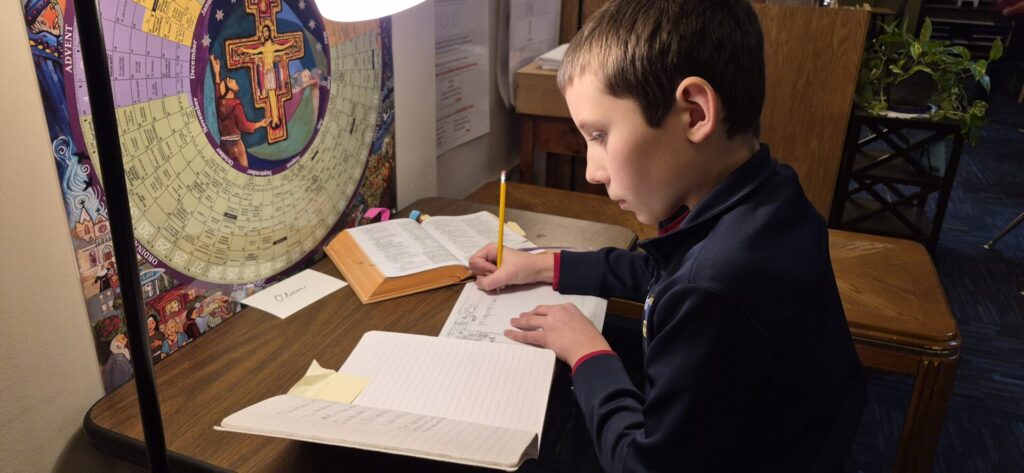
The Atrium: A Sacred Space for Listening to God
In the Catechesis of the Good Shepherd atrium, children are gently introduced to the Holy Bible—God’s Word to us. Through Scripture, they begin to discover the depth of His love.
This sacred space invites children to cultivate silence, creating an atmosphere where they can listen closely to His voice. The atrium is more than a classroom—it is a place of prayer, reflection, and encounter with God.
As catechists, we are blessed to witness the profound spiritual insights of children. During one session, as the catechist prepared to light the candles on the model altar, a three-year-old boy quietly whispered, “Jesus is the love in me.”
Catechesis of the Good Shepherd: A Sacred Journey for Children
The Catechesis of the Good Shepherd (CGS) is a unique approach to the religious formation of children, rooted in Sacred Scripture, the liturgy of the Church, and the educational principles of Maria Montessori.
Children gather in a specially prepared space called an atrium—a peaceful, beautiful environment filled with simple materials designed to help them encounter God in a personal and meaningful way.
In the atrium, trained catechists present passages from Scripture that speak to the child’s natural longing to be close to God. Together, they enter into a time of wonder and reflection, asking profound questions such as:
“God, who are You?”
“How do You love us?”
“What is the Kingdom of God like?”
“What is our place in it?”
This method honors the child’s capacity for deep spiritual insight and invites them into a lifelong relationship with God.
PreK & Kindergarten Child
Level I Catechesis of the Good Shepherd (Ages 3–6)
In the Level I atrium, children ages 3 to 6 are invited to enjoy and deepen their relationship with Jesus, the Good Shepherd. This sacred space is designed to nurture their natural sense of wonder and openness to God’s love.
Children encounter the life and teachings of Christ through beautiful, hands-on materials and gentle presentations. These experiences help make the great mystery of who God is more accessible and meaningful to the child.
To help children understand that Jesus is a real person, they explore:
Geography of the Holy Land
Words of the prophets
Infancy narratives
The Paschal narratives are also introduced using tactile models such as:
A model city of Jerusalem
An empty tomb
A cenacle representing the Last Supper
Children reflect on parables that stir their curiosity and awe about the Kingdom of God, and they become familiar with the articles of Baptism and the gestures and elements of the Eucharist.
Each atrium includes a prayer corner that reflects the liturgical season through colors, prayers, songs, artwork, and Scripture readings—helping children enter more fully into the rhythm of the Church year.
Elementary Child
Level II & III Catechesis of the Good Shepherd (Ages 6–12)
As children grow in their capacity for relationship and reflection, the Catechesis of the Good Shepherd continues to meet them with deeper themes and richer theological insights. For the elementary-aged child, the image of the True Vine from John 15 becomes central:
“I am the vine, you are the branches. Whoever remains in me, and I in him, will bear much fruit, because without me you can do nothing.” — John 15:5
This scripture speaks powerfully to children ages 6–12 as they begin to explore their relationships with God, family, friends, and the wider community.
In this stage of formation, children:
Reflect on Jesus’ moral parables, which guide their developing sense of right and wrong.
Study the parts of the Mass, deepening their understanding of the liturgy.
Prepare for the sacraments of First Reconciliation and First Communion.
Explore the History of the Kingdom of God, focusing on the great moments of Creation, Redemption, and Parousia.
Learn about God’s covenants with the Hebrew people and expand their knowledge of the prophets.
This level of catechesis supports the child’s growing sense of time, history, and moral responsibility, helping them see their place in God’s unfolding plan of salvation.
Praying With Your Children
As parents, we often pray earnestly for our children. But praying wit our children is another beautiful gift.
A child’s prayer is very different from an adult’s—and that difference is what makes it such a privilege to join them. When children pray freely, their words are simple and heartfelt, drawing us into a joy in God that we may have forgotten.
So, what is prayer? Many of us have learned that prayer is “talking to God.” While that is true, young children remind us that prayer is much more. It is listening to God, receiving His gifts, and responding with love. Their natural way of praying opens our hearts to a richer, deeper understanding of what it means to live in relationship with Him.
